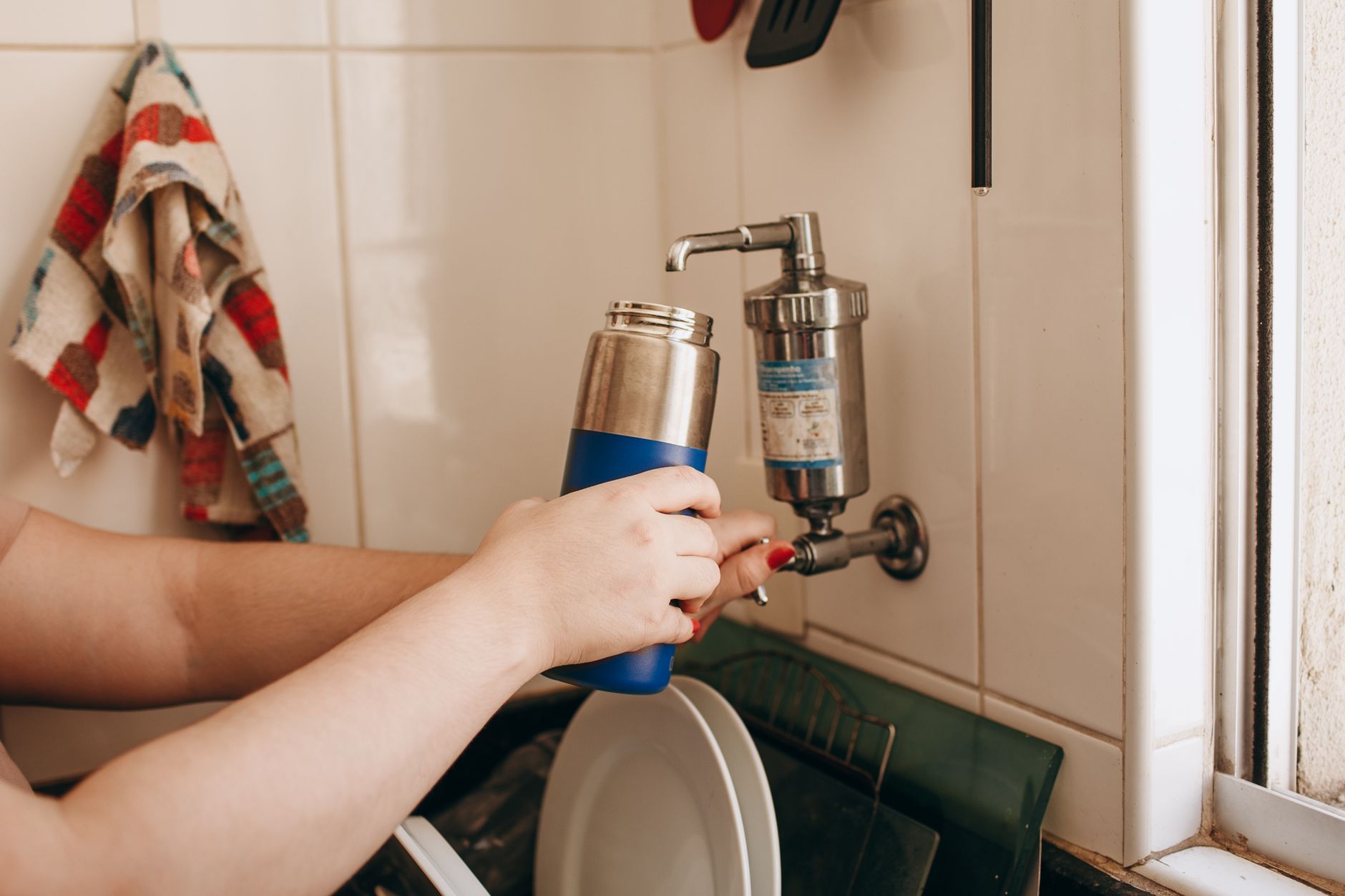
Walking into the water filter aisle at a home improvement store can be overwhelming. Pitcher filters, under-sink systems, reverse osmosis units, whole house filters — each solves a different problem. Choosing the wrong one means spending money on filtration you do not need or, worse, missing the contaminants that are actually in your water. This guide walks you through the decision step by step.
Step 1: Test Your Water First
No filter recommendation is reliable without knowing what is in your water. There are two ways to test:
- DIY test strips: Available at hardware stores for $15 to $30. They give a quick reading for chlorine, pH, hardness, nitrates, and a few heavy metals. Fast but not highly accurate.
- Certified lab test: Send a water sample to an NSF-certified laboratory. A comprehensive panel covering 100+ contaminants costs $100 to $200. This is the only reliable way to know exactly what you are dealing with.
If you are on city water, you can also request your annual Consumer Confidence Report (CCR) from your utility provider. It lists all detected contaminants and their levels.
Step 2: Identify Your Priority Contaminants
Once you have your test results, focus on the contaminants that exceed EPA recommended levels or that are causing noticeable problems:
- Chlorine or chloramines: Common in city water. Causes taste and odor issues and dries out skin.
- Lead: Found in homes with older plumbing. A serious health concern with no safe exposure level.
- Hard water minerals (calcium and magnesium): Cause scale buildup, appliance damage, and dry skin and hair.
- Iron: Common in well water. Stains fixtures and laundry orange or brown.
- Nitrates: Found in agricultural areas. Particularly dangerous for infants.
- Bacteria or pathogens: A risk in well water or after flooding.
Step 3: Match the Contaminant to the Filter Type
Different filter technologies remove different things. Here is a quick reference:
- Activated carbon: Best for chlorine, chloramines, VOCs, taste, and odor. Does not remove heavy metals, nitrates, or fluoride.
- Reverse osmosis (RO): Removes up to 99% of most contaminants including lead, nitrates, fluoride, arsenic, and bacteria. Requires more maintenance and wastes some water.
- Water softener (ion exchange): Specifically targets hard water minerals (calcium and magnesium). Does not filter other contaminants.
- UV purifier: Destroys bacteria, viruses, and pathogens using ultraviolet light. Does not remove chemicals or sediment.
- Sediment filter: Removes sand, dirt, rust, and particles. Always used as a pre-filter before other systems.
Step 4: Decide Where You Need Filtered Water
This determines whether you need a point-of-use or point-of-entry system:
- Drinking and cooking only: An under-sink filter or reverse osmosis system at the kitchen tap is the most cost-effective solution.
- Whole home protection: A whole house filter or softener installed on the main supply line treats every outlet — showers, appliances, and all faucets.
- Temporary or rental situation: A countertop filter or pitcher filter requires no installation and moves with you.
Step 5: Consider Your Budget
Filter costs vary widely:
- Pitcher filters: $25 to $60 upfront, $50 to $100 per year in replacement filters.
- Under-sink filters: $100 to $400 upfront, $50 to $120 per year in cartridges.
- Reverse osmosis systems: $150 to $600 upfront, $50 to $150 per year in filters.
- Whole house filters: $300 to $2,500 depending on complexity, $100 to $200 per year in maintenance.
- Water softeners: $400 to $2,000 upfront plus ongoing salt costs of $5 to $20 per month.
Step 6: Check for NSF Certification
Before buying any filter, verify it carries NSF/ANSI certification for the contaminants you want to remove. NSF Standard 42 covers chlorine and taste. Standard 53 covers health contaminants like lead and VOCs. Standard 58 applies to reverse osmosis systems. Standard 44 covers water softeners. A certified filter has been independently tested — a non-certified filter is just a marketing claim.
Common Mistakes to Avoid
- Buying a filter without testing your water first.
- Assuming the most expensive system is the best for your specific problem.
- Forgetting to factor in ongoing filter replacement costs.
- Choosing a whole house filter when you only need better drinking water.
- Skipping sediment pre-filtration before an RO or carbon system, which dramatically shortens filter life.
Bottom Line
The best water filter for your home is the one that matches your specific contaminants, your installation situation, and your budget. Test your water, identify the problems, and then choose the technology designed to solve them. Any other approach is guesswork.
Disclaimer: Water quality varies significantly by location. Always test your water before purchasing filtration equipment.